Archive for the ‘November 5th’ Category
The Plough Pub Epic Fireworks Display 2009
Many thanks to the Plough Pub for posting the HD Firework video and the fantastic firework photograph’s of the 2009 Bonfire Night Fireworks Display. All fireworks from Epic Fireworks.
Click here to see another firework video from one of our customers.
Guy Fawkes and the Gunpowder Plot, conspiracy
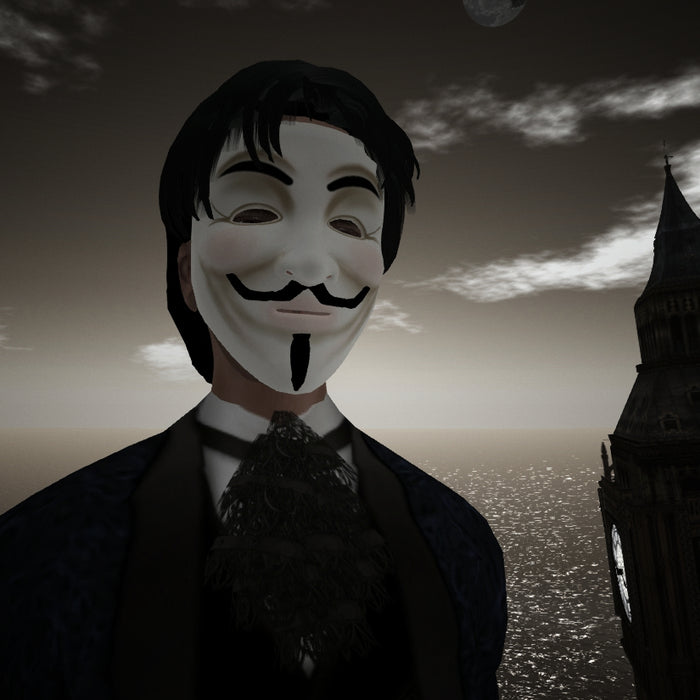
Bit of a joke poster for the 5th November gunpowder plot. Was it an inside job? Quite possibly, it has been suggested by a few conspiracy theorists that the whole plot was an inside job by the govenrment to convince King James that the Catholics could not be trusted. Seems like a strange stunt but consider the following points:
Robert Cecil, the Earl of Salisbury and James’ right hand man hated Catholics and saw them as real trouble makers. Cecil was worried that King James would go softly on them during his reign and this irked him to say the least. Cecil wanted Catholicism out of England altogether, the steps that King James were taking to expel priests was not enough for him.
It is well known (amongst those who know) that James was very scared of meeting a violent end. Growing up in Scotland his life had been full of dangers; he was even kidnapped as a young boy. Cecil knew this and it’s possible he thought that by getting James to believe they had tried to blow him up would turn him against them for good.
36 barrels of gunpowder is a lot of powder. In those days the government tightly controlled all the gunpowder in Britain, so how did Guy Fawkes and co. get a hold of that much? Did they have a contact inside parliament?
Why would a bunch of Catholics be allowed to rent a house so close to the Houses of parliament or a cellar right underneath it? Seems a bit unlikely in those troubled times.
Why search the parliament cellars on that night, for the first time in British history? What would inspire such a search? Convenient, almost too convenient.
Why did the soldier who shot Robert Catesby and Thomas Percy at the shootout at Holbeach House receive such a large pension (allegedly 10p a day for life) as a reward? Surely these men would have been better taken alive so they could squeal on their co conspirators.
All intriguing and thought provoking arguments, however, just like any good conspiracy there are counter arguments just as powerful. We will attack them in reverse order. Just to be different.
The soldier had bravely fought and risked life and limb for his King and country, of course he was due a good pension. Although 10p a day seems a bit meagre by today’s standards it was a lot back then.
The cellars were most likely searched because of Lord Monteagles letter. “What’s that?” I hear you say. I’m glad you asked.
During the preparation, several of the conspirators had been concerned about fellow Catholics who would be present on the appointed day, and inevitably killed. One conspirator, Francis Tresham – who had been introduced to the plot as he was a wealthy Catholic, and could provide money and weapons – is suspected of writing the anonymous letter of warning to Lord Monteagle, a prominent Catholic and Tresham’s own Brother-in-law. Monteagle received the letter on Friday October 26, at his house in Hoxton:
My lord out of the love I bear to some of youre frends I have a care of your preseruasion therefore I would advise you as you tender your life to devise some excuse to shift of your attendance at this parliament for god and man hath concurred to punish the wickedness of this time and think not slightly of this advertisement but retire youre self into youre control where you may expect the event in saftey for though there be no appearance of any stir yet I say they shall receive a terrible blow this parliament and yet they shall not see who hurts them this councel is not to be condemned because it may do you good and can do you no harm for the danger is passed as soon as you have burnt the letter and I hope god will give you the grace to make good use of it to whose holy protection I commend you.
Monteagle had the note read aloud, possibly in an attempt to warn the plotters the secret was out, and promptly handed it over to Robert Cecil who was the 1st Earl of Salisbury and the Secretary of State. The other conspirators learned of the letter the following day but resolved to go ahead with their plan after Fawkes inspected the undercroft and found that nothing had been touched.
So, it seems from this that it was this letter from the traitor to the plot, Francis Tresham, that in the end tipped off big Cecil and foiled the plan.
The plotters would all have been using fake names and concealed their true identities, indeed we know that Guy Fawkes was under the assumed alias “John Johnson” which is the lazy and quickly thought up fake name a young miscreant might give when inadvertently having his collar felt by the rozzers today.
“My name, erm, John”
“John what!?”
“Erm, John Johnson?”
Furthermore Thomas Percy had contacts in the parliament and these were almost certainly used in obtaining the rented property for their devious scheme.
36 barrels of gunpowder is a lot of powder, but come on, anything can be obtained if you know the right people and have the hard cash. Guy Fawkes knew a lot of military types from his days in the Spanish army so this would have been a very easy obstacle for them.
So if it was a big conspiracy, why did Fawkes not crack under torture and spill the beans? He was famously tough to interrogate (like Mel Gibson in Lethal Weapon) in fact the only one who cracked and talked was Thomas Winter and he made no mention of a double conspiracy. They all knew they would be executed one way or the other so why not snitch at this point as there was nothing left to lose.
The other little unanswered question here is Francis Tresham.
He was the man who wrote the letter to Lord Monteagle and also the one man who was not killed or hanged with the others. He was locked in the Tower of London and allegeldly died from taking poison on the 23rd December 1605. Where did he get the poison from? Did someone want him silenced? Was he poisoned at all or did he abscond in secret out of the country for his part in helping the government?
It is almost certain the big Cecil was at it somehow although exactly how we will never know; in fact all of these questions perhaps will never be answered. One thing that is for sure that the arguments over the conspiracy will rage on and continue to keep us entertained for many years to come.
For more information on the history of the Gunpowder Plot and the events that led up to it visit the Epic Fireworks Learning Centre.
The good old days of bonfire night
Yes kids, believe it or not young people had to work for their entertainment in the olden days.
Above you can see a group of rosy cheeked youngsters out collecting firewood for their bonfire. In those days the bonfire was just as important as the fireworks and it was a matter of pride to ensure that your street/village/club had a bigger bonfire than your local rivals. It was not uncommon for young wags (wag meaning something different in those days, not the wife or girlfriend of a footballer) to sneak out to light the bonfire of their “enemies” the night before bonfire night, leaving them with a pile of ashes rather than a big pile of wood.
Such acts often met similar retaliation and this could mean that no-one had a bonfire come the big night. Such is the nature of man.
We must only hope that these barrels did not contain anything flammable. Can you imagine a group of kids doing something like this nowadays? No, you can’t, because health and safety would have a fit, saying such things as:
“Climbing on top of a pile of wood, terribly unsafe.”
“Those barrels could slip and fall at any time.”
“This is an outrage.”
and other such mutterings.
However surely these are rights of passage for a young lad and made them appreciate their hard work when they see the flames licking up from their bonfire heap and think “I made that”. This is something that is sadly lacking in todays culture. The kids would much rather sit and play their new computer game “bonfire builder 4: The finding of the pallet”
Now this is definately not the safest lad in the village.
It was common in the good old days for everyone to get rid of all their old crap during the bonfire season. Anything that could burn would be thrown onto the pile. Busted old sofas, the obligatory smelly urine stained mattress (when not occupying a skip), broken doors, piles of old tyres (as seen in the photograph above) that would billow out thick black toxic smoke for days. Nothing was banned from being thrown on a fire, after all, our fire had to be bigger than theirs. Nowadays of course, you cannot burn a piece of wood if it has a dot of paint on it as this will pollute our clean air.
We are all for clean air laws and would not condone burning anything that did not comply. But it did feel natural to launch practically any household item onto a fire, it was like a Spring cleaning, in Autumn and positively enforceed community participation.
And this is what is missing today; Community participation. The image above shows people dancing gaily (that meant something different in the olden days too) sharing each others company and coming together in a spirit of community. This was back in the days when people knew their neighbours forenames and surnames and spoke to each other more than just the morning nod as everyone jumps into their cars. Times were when a man felt like he belonged to street or town or village and did not just live there.
The bonfire was an integral part of this belonging, and like bonfire festivals and events that still go on around the world is a vital part of bringing people together. After all, many people still call it Bonfire Night.
What do you call the 5th of November?
a)Bonfire Night
b)Guy Fawkes Night
c)Fireworks Night
Leave us a comment and let us know.
Plastic Roof Means No Fireworks
The future of Whangarei’s popular Guy Fawkes fireworks display is up in the air as organisers hunt for a suitable venue.
The Lions Club of Whangarei has been putting on the annual early November fireworks display for 15 years at Okara Park.
But last year’s event had to be moved as the park was being upgraded.
It was then cancelled after the alternative venue – Tikipunga Sports Domain – was deemed unsuitable because dozens of horses were nearby.
Now the new Northland Events Centre stadium’s plastic roof makes it an unsuitable spot for the display.
Lions Club of Whangarei president Malcolm Hawthorn said after last year’s “disaster” the club had wanted to gauge public support for whether the event should continue, and if so where it should be held.
Mr Hawthorn said the fireworks spectacular was among the longest and best pyrotechnic shows in the country, but the rules stipulate that when you shoot rockets from 15cm mortars they have to be well away from people and buildings.
“Following last year’s disaster we have now identified that there are no alternative public spaces that meet the fire zone and public setback regulations,” Mr Hawthorn said.
“The future development of Pohe Island/William Fraser Memorial Park is the only public space with the required areas available for this activity in the future. It is ideal, being close to our old Okara site, meaning it does not have any livestock or horse issues if the event was held on the city periphery.”
He said Okara Park was no longer suitable, despite its $18.5million upgrade into a multievents centre, as there were two main impediments.
“Firstly it’s [the new stadium] got a plastic roof and we can’t risk the roof. Secondly the [neighbouring] Old Boys ground has been sold to Hill Construction for development,” Mr Hawthorn said.
“We used to fire our big shells from the Old Boys ground and that development will affect those setback rules.”
The event took a lot of organising and raised more than $20,000 for charity, but before Lions committed to continuing it wanted to find out what the public thought.
The club had talked about putting on a free show, including possibly setting off the fireworks from a barge on Hatea River, and calling for donations, but that carried too much risk for the club.
Barge Park was also not an option because of nearby bush, while Port Nikau had also been looked at, but that would only be for four or five years maximum.
Mr Hawthorn said if the public wanted the event to continue, and backed Pohe Island as the spot, the club would approach the Whangarei District Council for permission.
“If they wanted Pohe Island we’d have to ask the council be careful not to obscure too many sight lines, and block the views of the fireworks, when they redevelop the park,” he said.
“But we need to know what the public wants first.”
GUINNESS WORLDS BIGGEST BONFIRE
The largest bonfire had an overall volume of 1,401.6 m³ (49,497 ft³). The bonfire was built by Colin Furze (UK) in Thistleton, Leicestershire, UK, and lit on 14 October 2006. Click here for further reading.


![Reblog this post [with Zemanta]](http://img.zemanta.com/reblog_e.png?x-id=2c987e8a-c602-4ddd-ae42-7c33eef8d076)


![Reblog this post [with Zemanta]](http://img.zemanta.com/reblog_e.png?x-id=bad735c9-5dfa-4db5-bf9f-9740e6ce561e)


![Reblog this post [with Zemanta]](http://img.zemanta.com/reblog_e.png?x-id=bef70249-3b20-4e06-aa0b-a4cbfcfb8406)