Twitter Updates
Latest Blog Posts
Comments

Archive for the ‘Diwali’ Category

Diwali On The Square

Have An Epic Diwali

The people of London are being invited along to one of India’s biggest celebrations of the Year, Diwali.

The very heart of London, Trafalgar Square will be an array of light and colour as the celebrations for Diwali take hold.  The celebrations will include light displays, colourful decorations and a mixture of dancing in both contemporary and traditional Indian styles.  This year’s event plans to offer everyone the chance to take part in a traditional circular dance known as the garba accompanied by live music.

2012 marks the 11th anniversary of the free Trafalgar Square festival where you can expect even more glitz and glamour than ever before.  The festival celebrates the coming together of Hindu’s Sikhs and Jains together with those of all manner of different faiths to celebrate this beautiful event.

With Diwali having such strong religious significance to many people living in and around London and the rest of the UK, there will be prayers for peace and other special messages which will be shared by crowds present at the event, in traditional style in offering thanks and celebrating good over evil.

The word Diwali (or Deepavali) means ‘row of lamps’, and it is common to see lamps during the five day festival as the light symbolises the arrival of Lord Rama as he liberates Queen Sita and quashes the evil Ravana.

There are similar celebrations around the UK but none more spectacular than those at the heart of the Golden Temple at Amritsar.  The tradition of lighting up the temple started in 1619 when the temple was illuminated with lots of lights to welcome home and celebrate the release of  Guru Hargobind from imprisonment in Gwalior fort.  Sikhs have continued this tradition since.  Fireworks displays are commonplace in the late evening after prayers of thanks have been offered.

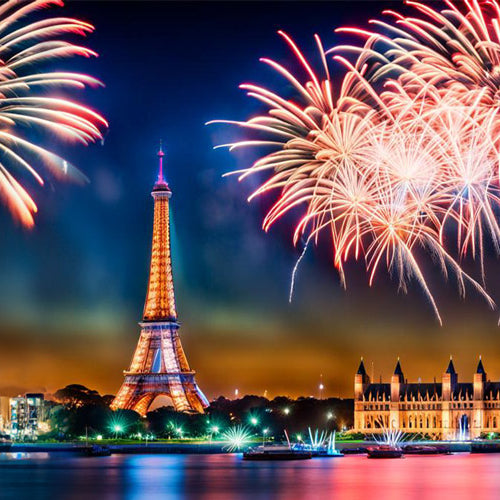
Here are a couple of the fireworks displays:

Enhanced by Zemanta

Diwali In Leicester 2012

Happy Diwali

Diwali (Dīvali, Dīpāwali, or Deepavali) is a festival of lights observed on the 15th day of the month of Kartika in the Hindu calendar. Many people in the United Kingdom celebrate Diwali each year.

Diwali is a time for spring cleaning in homes and offices. Many homes that celebrate Diwali have assorted sweets, savouries and Diwali herbs. Various lights, candles and sparklers are lit inside and outside homes.

Many people wear their finest clothes to celebrate Diwali. Many women wearing jewellery and silk outfits and some have mehendi, which is a temporary henna decoration, on their palms. Many Indian businesses see Diwali as a day to start the new financial year because of Diwali’s ties with Lakshmi, the goddess of wealth.

Cities throughout the United Kingdom celebrate the Diwali festival with firework displays, dances, plays, street lighting, Diwali lanterns, traditional Indian food, and music. Hindu council representatives, spokespeople from Indian associations, and political leaders publicly announce their greetings to those involved in organizing and participating in Diwali celebrations.

The festival of lights this year is certainly going to be a massive affair in Leicester thanks to O2. Diwali Celebrations in Leicester are one of the biggest outside of India, with up to 35,000 people attending the switch on of the lights on Belgrave Road and even more attending Diwali day itself in the heart of the city’s Asian community. The big switch on will take place on Sunday 4th November 2012. Enjoy the fireworks display and live cultural entertainment on stage as the festival of light marks the start of the Hindu New Year.

The huge effigy of King Ravana will be torched as the highlight of Dashera celebrations taking place at Cossington Street Recreation ground, Belgrave, on Wednesday 24 October, from 6.30pm until 8pm. The festival of Dashera celebrates the Hindu story of the battle between Lord Rama and King Ravana, and the victory of good over evil. The celebrations will also include children’s funfair rides, a cultural programme on stage and will end with a dramatic firework display.

Other events include the Diwali railway which is going to have the Diwali Trail making its way around the museums site railway but make sure to wrap up good and warm for this special trip. There is a small fee for this and more details are available from Leicester Information services.

There are events later in the month including an exhibition of Vintage Bollywood Sari and a stunning vintage wedding mendap is to be installed on the mezzanine for the occasion. The exhibition runs from 13th to 17th November. There is also a dance exhibition including classical Indian dance, Indian hip hop and a mix of ethnic groove.  Get yourself along to experience any of the above or indeed, learn to tie a sari this Diwali as again, there are some workshops on how to achieve the perfect waterfall gather.

Wherever you are and if you plan to join in the celebrations this year, have you considered adding fireworks to the mix. We have the biggest, brightest and most colourful fireworks in the UK and we can deliver to anywhere in the UK.

Happy Diwali from Leicester 2009 343

Enhanced by Zemanta

Facts About Diwali

Have An Epic Diwali

Diwali, the Hindu festival of lights, is the most popular of all the festivals from South Asia. It is also an occasion for celebration by Jains and Sikhs.

The festival of Diwali extends over five days. Because of the lights, fireworks and sweets involved, it’s a great favourite with children.  The festival celebrates the victory of good over evil, light over darkness and knowledge over ignorance, although the actual legends that go with the festival are different in different parts of India.

In Britain, as in India, the festival is a time for thoroughly spring-cleaning the home, wearing new clothes and most importantly, decorating buildings with fancy lights.

Here are some Diwali facts:

  • DIWALI – Also referred to as DEEPAVALI or DEVALI – TRANSLATION – ROW OF LAMPS
  • Diwali is an official holiday in India, Nepal, Sri Lanka, Mayanmar, Mauritius, Guyana, Trinidad and Tobaggo, Suriname, Malaysia, Singapore and Fiji
  • The day after the celebrations for Diwali is referred to as Gujarati Hindu is seen as the start of the New Year
  • Bhai Bij – this is the day for a sister to worship her brother.  The brother is the family’s representation of Krishna who killed the demon Narkasura
  • Labh Pacham – this is the name given to the start of the new Financial Year for Hindu shopkeepers and Businessmen
  • In Goa and Koncan, the day after Diwali they create effigies in the image of the demon Narkasura and burn them early evening
  • Diwali marks the end of harvest in most areas of India.  They celebrate the year that has been and pray for a good harvest for the year to come
  • The word Diwali means ‘row of lamps’.  It is commonplace for rows of lamps to be outside of the homes of families celebrating diwali.  The little lamps ‘dipa’ are filled with ghee (clarified butter) and light the way for the spirits
  • The dipa are left burning all night and Indian homes are cleaned thoroughly to make sure that the goddess Laksmi feels welcome
  • The Diwali festival celebrates the return of Lord Rama, Sita and Lakshimana after their years in exile
  • The celebrations last for five days and each have special significance.  The first day is Dhanteras – the financial year starts.  The second days is Naraka Chaturdasi – celebrating the vanquishing of Naraka.  Day 3 is Amavasya – the worship of Lakshmi – signifies wealth and best wishes to all devotees.  Day 4 – Kartika Shudola Padyani – celebrating when Bali took over his new kingdom and day 5 – Yama Dvitya – the day when sisters worship their brothers
  • Gambling during Diwali is encouraged as it is believed to bring good luck for the year ahead
  • Diwali is significant in the Sikh faith as the foundation stone was laid at the Golden Temple at Amritsar was laid on the first day of Diwali in 1577
  • Traditionally, families gather together to visit temple, eat with family and friends a specially prepared festive meal, exchange gifts, cards and traditional sweets
  • Diwali would not be complete without the sweets.  Traditionally, Indian food is hot a spicy but their deserts are super sweet too so it is a complete opposite.  For Diwali, the traditional sweeties are usually milk flavoured with choices from Laddoos, Kaju Katli, Jalebi and others.

Blog Widget by LinkWithin
Categories